By Peter McCusker
TWO hundred years ago, at the dawn of the British-led industrial revolution, the global population stood at one billion.
Over the ensuing two centuries, fuelled by reliable hydrocarbons, mankind prospered and the planet’s population blossomed to eight billion, with life expectancy concomitantly rising from 30 to over 70.
And, now, as we become subsumed by the on-rushing AI tech revolution, many are wondering whether life expectancy could become infinitesimal.
It was undoubtedly a flight of twenty-something, ironic, hubris that inspired the Gallagher brothers, of Oasis, to pen their 1994 hit ‘Live Forever’.
But 30 years later, as the boomer generation once more gate-crashes established societal boundaries, that Oasis sentiment is gaining enormous traction.
Leading this longevity revolution are the ‘tech-titans’ such as Sam Altman, CEO of OpenAI, with his anti-ageing outfit Retro Biosciences, Amazon-founder Jeff Bezos, with Altos Labs, and Peter Thiel, and the Methuselah Foundation, which aims to make ’90 the new 50’ (1).
And, of course, Elon Musk. In a conversation at Davos this year with Laurence Fink, CEO of BlackRock and interim co-chair of the World Economic Forum, Musk expressed his belief that ageing is ‘very solvable’ adding: “I do I think we will figure out ways to extend life and maybe even reverse ageing – I think that is highly likely.”
In Dubai, last month, at a similar highfaluting gathering – the World Governments Summit (WGS) – Professor David Sinclair, of the Harvard Medical School’s Blavatnik institute, said that ‘Ageing is a medical condition that is increasingly treatable’.
And, referencing the recent approved FDA trials by his company Life Biosciences which aim to convert adult cells into pluripotent stem cells, he said: “We are about to test, for the first time in history, whether we can reverse ageing and cure diseases.”
This opinion is no longer an outrider. In response to a request from Agetech World we corralled thoughts and analysis from some of the planet’s leading longevity experts.
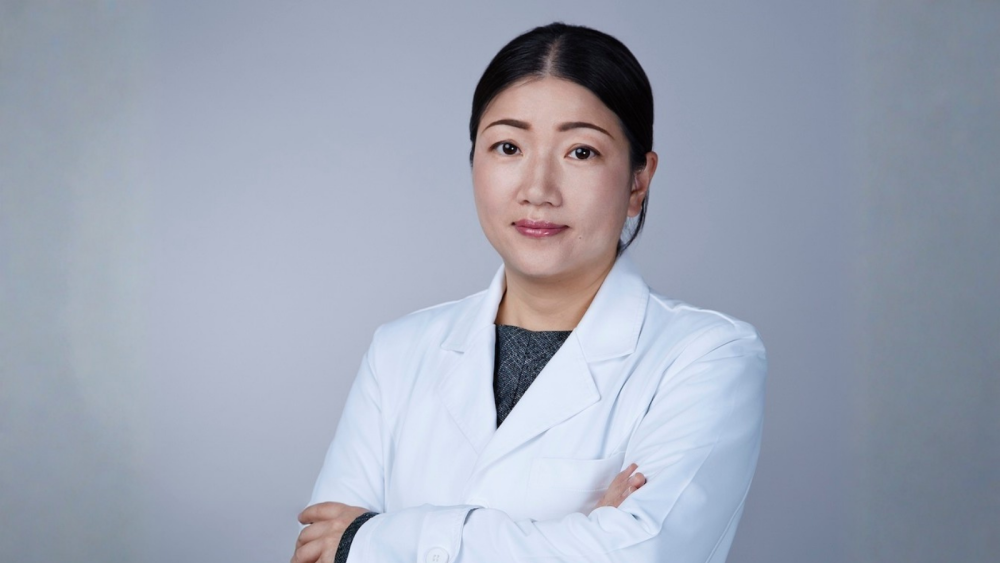
US-based pathology and immunity expert Dr Cherry Lo, of Manapura, says there is a distinct possibility that humans will be planning for individual birthday parties, well into the hundreds, sometime soon.
She said: “For living over 150 years, the golden code is to ensure our body’s regeneration pace remains significantly faster and more reliable than the dysfunction rate.
“In my career as a pathologist, I’ve seen first-hand that ageing and illnesses are not mankind’s final destination; it is a fall behind race against a clash of genetic instability, viral infection and daily environmental challenges.
“To navigate this, modern diagnostic technologies including gene-mapping and liquid biopsies are important guidelines, however, we need to act actively.
“From my perspective, the most critical ‘system update’; we can perform today is the stabilization of our bioenergetic and genetic regeneration supply chain.”
Dr Lo recommends the use of NMN (Nicotinamide Mononucleotide) a naturally occurring molecule that serves as a direct precursor to NAD+ (Nicotinamide Adenine Dinucleotide), a critical coenzyme found in every cell of the body.
NAD+ plays essential roles in energy production, DNA repair, gene expression, cellular metabolism, sirtuin activation – proteins linked to longevity – and mitigating oxidative stress and inflammation.
She continued: “Living styles are also important; choosing the best exercise for yourself, consuming more natural and healthy food, and taking in enough high-quality protein daily, best for plant-based protein, is essential.
“I believe the breakthrough in epigenetic reprogramming can bring us to, and, beyond 150 years lifespan.”
And referencing the FDA-cleared trial, led by Dr Sinclair, she added: “If the clinical trial is successful, this will be the first time we reprogram ourselves, bringing us back to the last checking point as our wish for the 150th birthday party.”
Dr Annu Navani, founder and chief medical officer at California-based Le Reve Wellness, likewise, believes that medical advances are making this increasingly achievable.
“We now understand that chronic disease is not just a measure of age. It’s because of chronic inflammation or autoimmunity, oxidative stress, myocardial dysfunction, decline of hormones, imbalance in autonomic nervous system, and we need to find strategies to be able to connect all of these dots to be able to have people live healthy.”
But she cautioned: “I strongly believe our healthspan can catch up with our lifespan, but realistically what is more important, is healthspan. What is the use of living for 150 years if you’re sick and living with diseases.
“We know that people have lived till 120 and so, but what can we do to make those 120 years really, really healthy and active for people, is, I think, what we should aim for.”

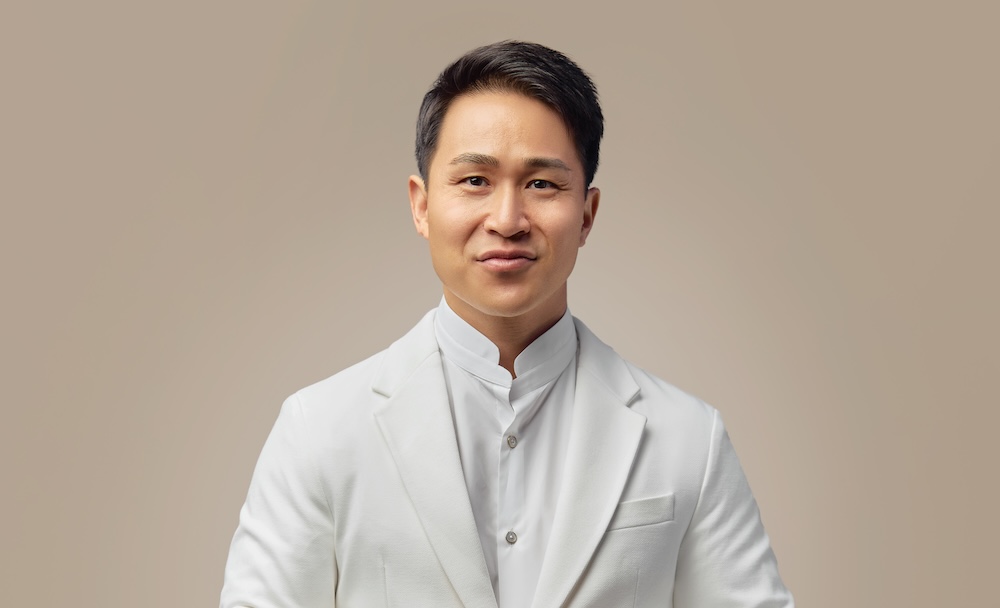
Miami-based Dr Halland Chen is a double board-certified Physician specializing in longevity medicine, cellular health, and biotech innovation.
Much of his recent work is focused on the potential of autologous mesenchymal stem cells (MSC) in delivering a fulfilling healthspan.
He said “I think there’s gonna be this, what we call a genetic ceiling…[and] this theoretically might be 120 to 130 years old. And ,then what happens? You can’t undo all the damage that’s been done to your organs, etc, over the preceding years.
“That’s why I focus so much on stem cells, because the answer is stem cells. It’s stem cells, it’s your hormones, it’s all the things that optimise the body into a healing state. So very much from my perspective of this, I think it’s about getting the body into a healing state.”
US chronic pain specialist Dr Matthew Bennett believes health-spans will improve over the coming years, however, there is a but.
“Whether lifespans will improve? We’re sure hearing they will. I think time will tell, though. I think we can get healthspans better; I think we can have people more functional until later ages, for sure.
“Will we live to 120, and beyond, like some people are predicting? I don’t know. I think it’s a guess. It’s easy to say that’s how it’s going to be because it sounds great and dramatic, but we’ll have to see how that plays out.
“The healthspan’s the most important thing. We don’t want you living like a piece of jelly in a chair for 50 years. No, that’s just not a life anybody would want.
“From a medical perspective, it’s going to be really helpful when we can start putting all of the pieces together. We need way more computational ability and better testing – this concept of ‘multi-omics’.

“What’s happening with the genomics and the epigenomics and the proteomics, the metabolomics, and the microbiomics?
“We don’t have the ability to put so many variables together yet, but I’m seeing some interesting things on the horizon for computational ability to start sorting through all these.
“AI may find connections we haven’t thought of yet because it’s great at seeing patterns. I do think there’s a future where we’ll live longer.”
Dr Clint Phillips, CEO and founder of Medici, a longevity-focused health platform centred on prevention and proactive care, said: “If you look at the pace of discovery in regenerative medicine, cellular biology, and diagnostics, we are clearly entering a new era in health science.
“I would not be surprised if living to 120 becomes far more common within the next few decades. Still, there is a piece of the longevity conversation that often gets overlooked, which is that technology alone will not save us.
“Artificial intelligence will absolutely accelerate drug discovery and help scientists analyse genetic data in ways that were impossible before. It will improve medicine in meaningful ways, but if you look at what is actually driving chronic disease today, the causes are rarely a mystery.
“It’s usually unhealthy lifestyles and bad habits that put our health at the greatest risk. People already know that soda, ultra-processed foods, poor sleep, and sedentary lifestyles are bad for them. The challenge is not knowledge. It is behaviour.
“The future of longevity will probably look less like a miracle pill and more like a combination of two forces. On one hand, there will be remarkable advances in biology and medical science. On the other hand, people need to rediscover how to live in a way that supports their body rather than constantly working against it.”

With longevity now becoming a feature of the emerging Asian economies, the number of people on the planet aged 60, and over, will increase from one to two billion by 2050.
Prof Sinclair sees this as a major economic opportunity telling the WGS: “In the US, extending a healthy lifespan by one year could generate an estimated $38trillion in economic value by improving productivity of people.”
He also linked his research to global challenges, noting that declining fertility rates are reducing workforce numbers.
“There are two solutions, replace them with robots or keep them alive and healthy,” he said. “Our greatest asset is human productivity.”
Yet, in some established G7 countries such as the UK, healthy life expectancy has fallen to its lowest level since records began.
For the period 2022–2024, people born in the UK can expect just over 60 years of life in ‘good’ or ‘very good’ health – 60.7 years for men and 60.9 years for women.
In wealthier London suburbs, such Richmond-upon-Thames, residents can expect to have almost 70 years of good health, whilst in poorer Northern towns such as Blackpool, men will average barely 51.
This may well reflect the lack of economic growth in the UK with GDP flatlining in the last 20 years due to the country’s disastrous energy policies, whilst its embrace of low-skilled, mass, immigration has boosted the population to 70m from 59m, since the year 2000.
This has put huge pressure on the public services such as the schools and NHS; where most patients with chronic conditions have to wait months, even years to be treated.
This dichotomy between those who have and those who have not is something that plays on the mind of Dr Navani.
She added: “We may develop the best technology, but we are only able currently to get to the top 1% of people – those who are invested in their longevity-based advanced care – those who can afford it.
“I would love to see each and every person here in the United States, as well as overseas, to really get to know about these exciting advances.”
Consequently Dr Navani will shortly be publishing a book entitled ‘Code to Cure’, which will outline the emerging longevity and regenerative technologies available in an effort to democratise this specialist medicine for the wider public.
João Pedro de Magalhães, a professor at the UK University of Birmingham, is a prominent gero-scientist who has been interested in the ethics of longevity since 2003.
He agrees, saying “(On) the equality question – what if longevity drugs are so expensive that only billionaires can access them?”
With longevity treatments potentially out of the financial reach of the many, the 1994 flight of fancy of the multi-millionaire Gallagher brothers may not be so facile, for them, after all.


Expert opinion from the double board-certified physician specialising in longevity medicine, cellular health, and biotech innovation.
The longevity advisor to supplement brand Manapura shares her thoughts on the global push to extend lifespan.
Dr Clint Phillips, CEO and founder of Medici shares his views with Agetech World.